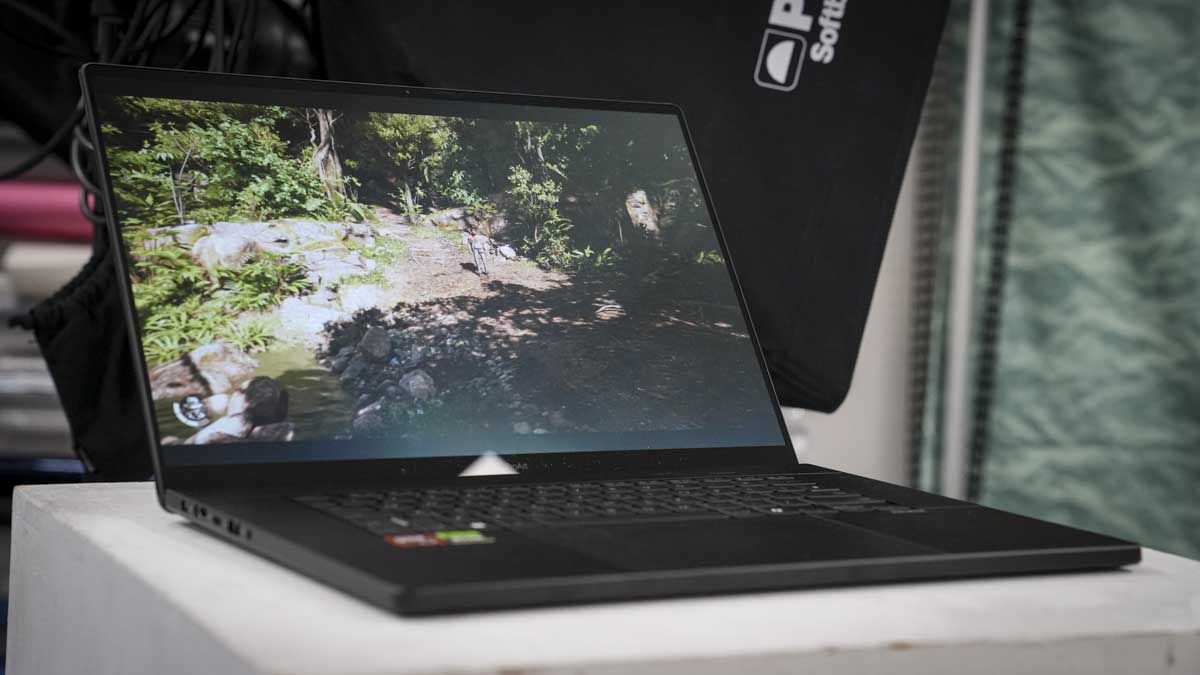
Choosing the Best Video Editing Laptop: Your Ultimate Guide to Specs & Displays
Venturing into the world of video editing, whether as a budding enthusiast or a seasoned professional, quickly reveals a fundamental truth: your tools matter. While creativity is paramount, the right hardware can transform a frustrating, lag-filled workflow into a smooth, efficient, and enjoyable experience. The search for the best laptops for video editing can feel daunting, with a myriad of specifications and brands vying for your attention. But it doesn't have to be. This comprehensive guide will break down the essential components, display features, and crucial considerations to help you select a machine that perfectly balances your needs with your budget.
Gone are the days when high-end video production was confined to dedicated edit bays. Today, powerful video editing tools are accessible to anyone with a capable laptop. However, "capable" is the operative word. Video editing is one of the most demanding tasks you can throw at a computer, requiring significant processing power, robust graphics, ample memory, and fast storage. Overlooking any of these elements can lead to frustrating bottlenecks. We'll help you navigate these complexities, ensuring you invest in a laptop that empowers your creative vision.
Essential Hardware for Seamless Video Editing
When evaluating the best laptops for video editing, the internal components are your starting point. These are the workhorses that handle everything from scrubbing through footage to rendering final exports.
Processor (CPU): The Brain of Your Operation
The CPU is the central processing unit, often referred to as the "brain" of your laptop. For video editing, you need a powerful multi-core processor capable of handling complex computations simultaneously. Look for:
- Intel Core i7 or i9 (12th Gen or newer): These offer excellent performance, especially the i9 series.
- AMD Ryzen 7 or Ryzen 9 (6000 series or newer): AMD's processors provide strong multi-threaded performance, often at a competitive price point.
- Apple M-series (M1 Pro, M1 Max, M2 Pro, M2 Max, M3, M4, M5 Pro/Max): Apple's custom silicon has revolutionized mobile computing for creatives, offering exceptional performance per watt and tight integration with macOS, making them incredibly efficient for video tasks. As highlighted by recent tests, the Apple MacBook Pro (M5 Pro, 2026) is a standard-setter for overall performance and energy efficiency.
More cores and higher clock speeds generally translate to faster rendering times and smoother playback, especially with high-resolution footage like 4K.
Graphics Card (GPU): Visual Powerhouse
While the CPU handles general processing, the GPU (Graphics Processing Unit) accelerates visual tasks, including real-time effects, color grading, and especially rendering. This is where discrete graphics cards shine.
- Discrete GPU: A dedicated graphics card with its own memory (VRAM) is highly recommended. NVIDIA GeForce RTX series (e.g., 3050, 4060, 4070, 4080) and AMD Radeon RX series are excellent choices. The more VRAM, the better for complex projects and higher resolutions.
- Integrated Graphics: While integrated graphics (like Intel Iris Xe or basic AMD Radeon Graphics) have improved, they are usually insufficient for serious video editing. Apple's M-series chips, however, feature highly capable integrated GPUs that perform exceptionally well due to their unified memory architecture.
Some gaming laptops might boast powerful GPUs, but be wary – their displays often fall short in color accuracy, a critical factor for video editors.
RAM (Memory): Multitasking Maestro
RAM (Random Access Memory) is where your computer temporarily stores data that it's actively using. For video editing, more RAM means you can work with larger project files, run multiple applications simultaneously, and preview your edits without constant stuttering.
- Minimum: 16GB is the absolute minimum for basic 1080p editing.
- Recommended: 32GB is the sweet spot for most 4K workflows and offers ample headroom for future projects.
- Ideal: 64GB or more is excellent for very complex 4K/8K projects, heavy effects, or professional-grade work.
While you might save money initially with 16GB, upgrading later can be costly or impossible on some machines, so invest wisely upfront.
Storage: Speed and Space
Fast storage is non-negotiable for video editing. You'll be dealing with large files that need to be accessed quickly.
- SSD (Solid State Drive): An SSD is essential. It offers dramatically faster read/write speeds compared to traditional HDDs (Hard Disk Drives), significantly reducing load times for footage, project files, and applications.
- NVMe SSD: For the ultimate speed, look for NVMe (Non-Volatile Memory Express) SSDs, which are even faster than standard SATA SSDs.
- Capacity: Aim for at least 1TB internal storage. Many professionals opt for 2TB or more. For even larger projects, external SSDs connected via fast ports like Thunderbolt are common.
Splitting your storage can also be beneficial: a smaller, faster SSD for your operating system and applications, and a larger SSD for your media files and projects.
The Visual Experience: Display Quality for Precision Editing
Beyond raw power, the quality of your screen is paramount. After all, you're creating visual content, and accurate representation is key.
Resolution and Panel Type
A high-quality display ensures your colors are accurate and your details are sharp:
- Resolution: While 1080p (Full HD) can suffice for some, 4K (3840x2160) or even higher resolutions are ideal for video editing. They provide more screen real estate for timelines and panels, and allow you to see your 4K footage at its native resolution.
- Panel Type:
- OLED: OLED displays offer incredible contrast, true blacks, and vibrant colors, making them excellent for color-critical work. The Asus ProArt P16, for instance, is highly praised for its stunning 4K OLED display boasting an incredible color gamut and deep contrast, making it a phenomenal choice for creative professionals.
- IPS: IPS (In-Plane Switching) panels are also a good option, providing wide viewing angles and decent color accuracy, though they typically don't match OLED's contrast.
- Color Accuracy: Look for displays that cover a high percentage of color gamuts like sRGB, Adobe RGB, and especially DCI-P3, which is important for video. Factory calibration is a huge plus.
Aspect Ratio & Size
The physical dimensions and aspect ratio of your screen also impact productivity:
- Size: 15-inch or 16-inch laptops generally offer a good balance between portability and screen real estate for detailed timelines. Larger screens (17-inch) provide even more space but compromise portability.
- Aspect Ratio: While 16:9 is standard, a taller 16:10 aspect ratio (like that found on the Asus ProArt P16 and many modern Macs) provides extra vertical space, which is fantastic for video editing timelines, allowing you to see more tracks or larger clips without as much scrolling.
Connectivity, Battery & Other Crucial Considerations
Beyond the core components and display, several other factors contribute to a practical and efficient video editing setup.
Ports: Your Workflow's Lifelines
A diverse selection of ports is essential for connecting external drives, monitors, and peripherals. Don't underestimate this!
- USB-C / Thunderbolt: Multiple USB-C ports, especially those supporting Thunderbolt (like Thunderbolt 3 or 4) or USB 4.0 (capable of 40 Gbps, as seen on the Asus ProArt P16), are vital. These offer blazing-fast data transfer for external SSDs and the ability to connect multiple high-resolution external monitors.
- USB-A: Still useful for older peripherals, so having at least one or two is convenient.
- HDMI: For connecting to external displays or projectors.
- SD Card Reader: A dedicated SD card reader is a huge time-saver for videographers and photographers, allowing direct import of footage from cameras. The Asus ProArt P16 includes this crucial port.
- 3.5mm Audio Jack: For headphones or external audio monitors.
Having a variety of ports reduces your reliance on dongles and adapters, streamlining your workflow.
Battery Life: Powering Your Creativity On-The-Go
If you're editing on location or away from a power outlet, battery life is critical. While powerful components tend to drain batteries faster, advancements in efficiency mean you can find machines that offer both power and endurance. Laptops like the Apple MacBook Pro (M5 Pro, 2026) are renowned for their long battery life, as is the Asus ProArt P16, which delivered over nine hours on a single charge despite its powerful hardware.
Cooling System
Video editing pushes laptops hard, generating significant heat. A robust cooling system is essential to prevent thermal throttling (where the laptop intentionally slows down to prevent overheating) and ensure consistent peak performance. While some powerful laptops, like the Asus ProArt P16, can run hot under heavy loads, effective cooling helps mitigate this.
Operating System (OS)
The choice between macOS and Windows often comes down to personal preference and existing ecosystem. Both are highly capable:
- macOS: Valued for its stability, user-friendly interface, and tight integration with Apple's M-series chips, offering exceptional performance and energy efficiency. Many creative professionals gravitate towards Macs.
- Windows: Offers a wider variety of hardware configurations and is generally more open in terms of software and peripheral compatibility.
Top Picks and Value Considerations
When it comes to specific recommendations, certain models consistently stand out:
- For an unparalleled overall experience, the Apple MacBook Pro (M5 Pro, 2026) is frequently cited as the gold standard, offering top-tier performance, exceptional battery life, and a stunning, color-accurate display.
- If raw export speed for large 4K projects is your priority, the Lenovo Yoga Pro 9i has demonstrated an ability to handle 4K exports faster than many competitors, all while featuring an accurate OLED display and a sensible port selection, often at a more competitive price point.
- For those prioritizing an exceptional visual experience with a comprehensive port selection and solid performance, the Asus ProArt P16 is a fantastic contender, especially for creatives who demand a brilliant 4K OLED display and a useful 16:10 aspect ratio.
- If budget is a primary concern but you still need good performance, the Apple MacBook Air (M5) is a strong budget-friendly option for less demanding editing tasks.
Remember that while gaming laptops might seem appealing due to their powerful GPUs, they often compromise on display quality, which is a critical aspect for video editors. Always prioritize a balanced machine that excels in all key areas.
Conclusion
Picking the best laptops for video editing doesn't have to be an overwhelming ordeal. By focusing on key specifications like a powerful multi-core processor, a dedicated graphics card, ample RAM, fast SSD storage, and a high-quality, color-accurate display, you can narrow down your choices considerably. Don't forget the importance of diverse connectivity and reliable battery life for a seamless workflow. Ultimately, the ideal machine is one that satisfies your specific creative needs and fits within your budget, ensuring you have the tools to bring your video visions to life without compromise.